
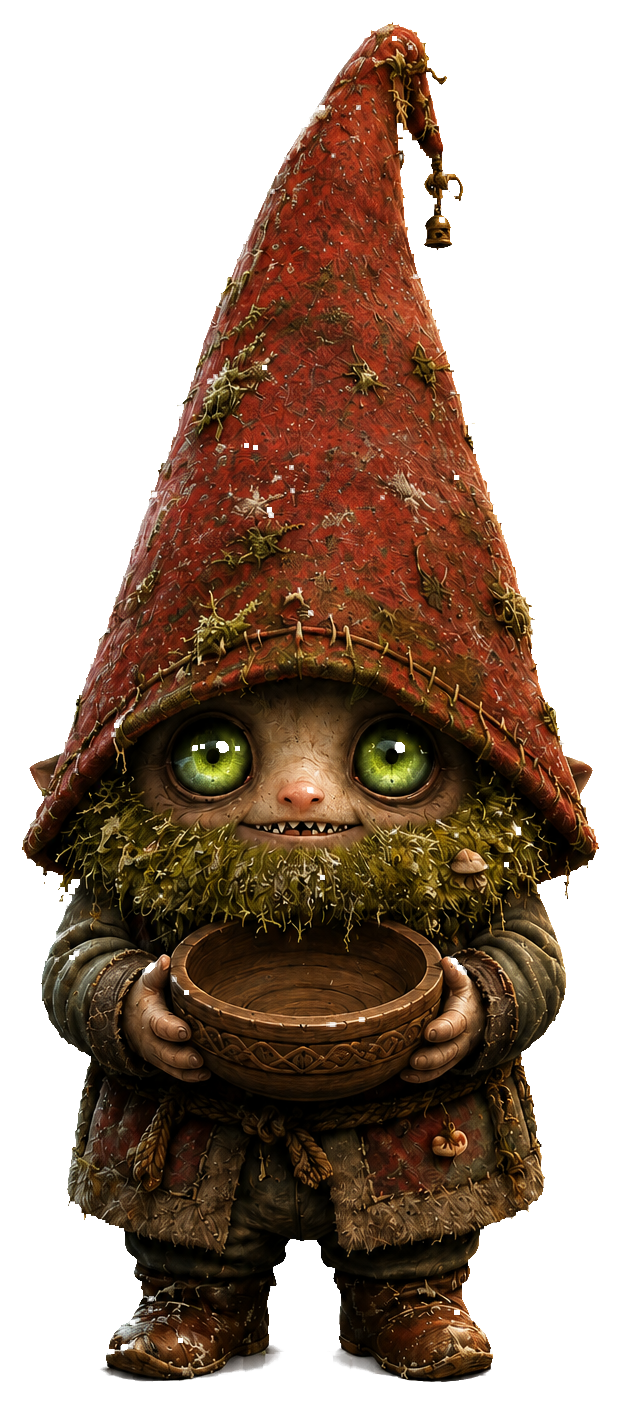
Möllerstad dawns three times before each winter. Once with the wind that bends the pines toward the south. Again with the first frost that stitches the windows shut from the inside. And the third time —the only one that counts— when someone, in some kitchen, remembers to leave the bowl of porridge by the door.
That year, no one remembered.
It was the winter they would later call the long one. The one that froze the rivers in a single night. The one that struck birds from the sky on the wing. The one the old folk of the north still measure every winter against.
Brita Andersdotter was eighty-two years old. Two sons far away, and one son —Erik— who went north one spring and did not come back. She lived in the last house of the village, the one that faces the woods, the one the neighbors called the house at the edge. Past her door there were no more houses, only trees. And past the trees, more trees.
On the night of the first ice, Brita cooked porridge for one, as always. She ate half. She kept the other half in an iron pot. She blew out the tallow candle. She lay down.
And then she heard the knock.
It was not a loud knock. It was the sound a wooden bowl makes when it leans, patiently, against the stone step of the door. Tap. And then silence. And much later, another tap, even softer, as if whatever was outside had sat down to wait.
Brita did not get up. She was old, and the old folk of the north know that some doors are not opened to see who is on the other side. She lay still and listened.
After a while, another sound. Small feet on the snow. Slow steps, neither child nor animal. The steps of someone who had the whole winter ahead and was in no hurry at all.
And then, nothing.
Brita slept badly, the way those sleep who have remembered something without knowing what. Before the light was really light, she rose, wrapped herself in her husband's shawl, opened the door a crack, and looked.
On the step was a wooden bowl. Empty. Clean. Polished by years of waiting. Beside it, on the snow, there were no footprints. Only a small warm circle, as if someone had sat a long while waiting for something that never came.
Brita lifted the bowl with both hands. It weighed less than air. It smelled of fallen pine, and of something older, something she had smelled once, as a child, in her grandmother's kitchen, when people still spoke in low voices of the little ones of the forest.
That night Brita cooked porridge for two.
She ate half. She put the other half in the wooden bowl. She left it on the step, by the door, before blowing out the candle. She heard nothing. She did not look out. She slept as she had not slept in years — the deep warm sleep of one who finally remembers whom she is cooking for.
And in the morning, she woke with something she had not expected.
Before she opened her eyes, before she thought of the stove or of the day, the memory came. Erik, at four years old, asleep on her lap. The exact weight of his head against her arm. His hair smelling of pine smoke. The way he had, without waking, taken hold of her little finger with his whole hand.
Forty years had passed since Brita last remembered that moment. She had searched for it a thousand times — for the voice, for the laughter, for the last embrace. But this one, of the little finger, she had lost without knowing. And now it was back. Whole. Warm. Hers.
She wept for a long while. Then she rose.
The bowl, outside, was empty. Light. Clean.
And from that first night, Brita always cooked for two. And the neighbors, one by one —first the oldest, then those who listened— began to do the same. And each morning, in some house of the village, someone would wake to a memory they no longer expected: a voice, a hand, a name. Just that. Enough for the day.
Grötfar had asked for nothing. He had only waited, patient, with his wooden bowl, until a forgotten hand remembered — and then, in silence, he gave back more than he was given.
They say in Möllerstad that he still walks the village, every cold night, with the same bowl. That he never takes more than was meant for him. That he does not knock. That he does not call. That he only sits on the step, and waits.
Leave the bowl tonight, even if you don't believe. Cook for two. Tomorrow, without knowing why, you will remember who is missing from you.
The winter is long, but it does not have to be lonely.